Handwashing — 20 Seconds at Key Moments
Wash your hands with soap and clean running water for at least 20 seconds at the moments that matter most: around food, after the toilet, after coughing.
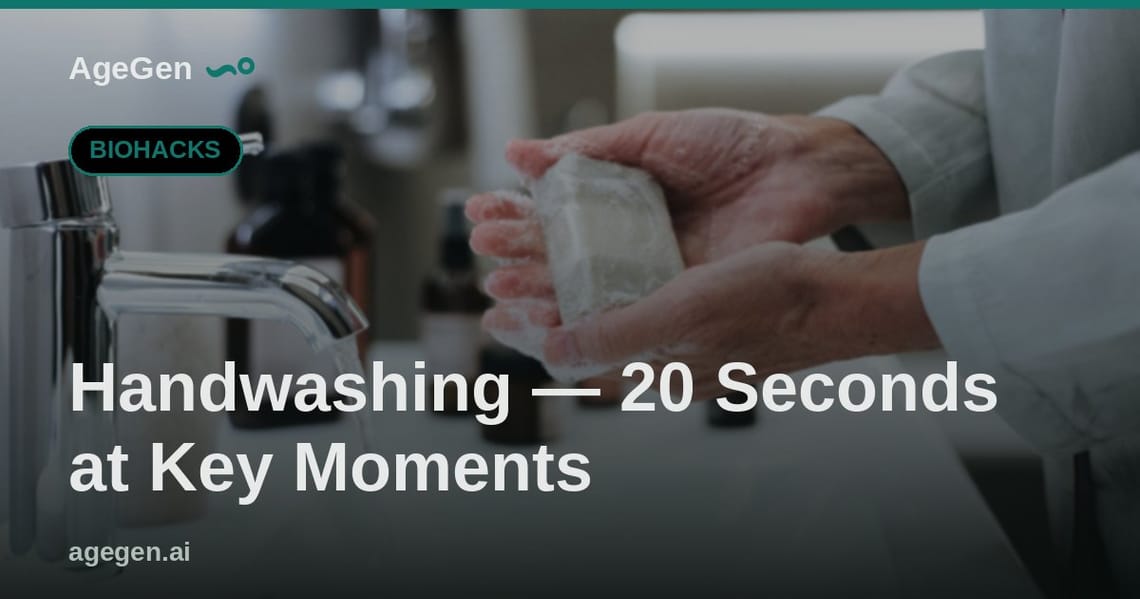
Wash your hands with soap and clean running water for at least 20 seconds at the moments that matter most: around food, after the toilet, after coughing or sneezing, and after touching animals or garbage.
The protocol
- How: wet hands with clean running water, turn off the tap, apply soap, lather the backs of the hands, between the fingers and under the nails, scrub for at least 20 seconds, rinse well and dry.
- When: before, during and after preparing food; before and after eating; after using the toilet or changing a nappy; after blowing your nose, coughing or sneezing; before and after treating a cut or wound; after touching animals, pet food or garbage.
- Timing: about as long as humming "Happy Birthday" twice.
- If no soap and water: an alcohol-based hand sanitiser with at least 60% alcohol, only when hands are not visibly dirty or greasy.
- Duration: ongoing.
What you get
- Washing with soap reduces the amount of germs and chemicals on your hands, including when they are visibly dirty or greasy.
- Helps protect you and the people around you from illnesses such as food poisoning and respiratory viruses.
Contraindications
- Hand sanitiser should not be used when hands are visibly dirty or greasy, for example after gardening or camping — wash with soap and water instead.
- If frequent washing leaves your skin dry, cracked or irritated, ask a clinician if it does not settle.
Evidence level
High. The CDC and the NHS both set the same 20-second, soap-and-running-water standard, and the CDC's own FAQ backs the mechanism of germ and chemical removal from the hands.
Sources
AgeGen never invents studies and never recommends prescription drugs by brand. Biohacks are experiments, not prescriptions — honour the contraindications and talk to a clinician if a condition above applies to you.