Chair-Based Leg Strength 20 min
Four lower-body strength moves against a sturdy chair — chair stands, toe stands, side and back leg raises — built for older adults or anyone returning to exercise.
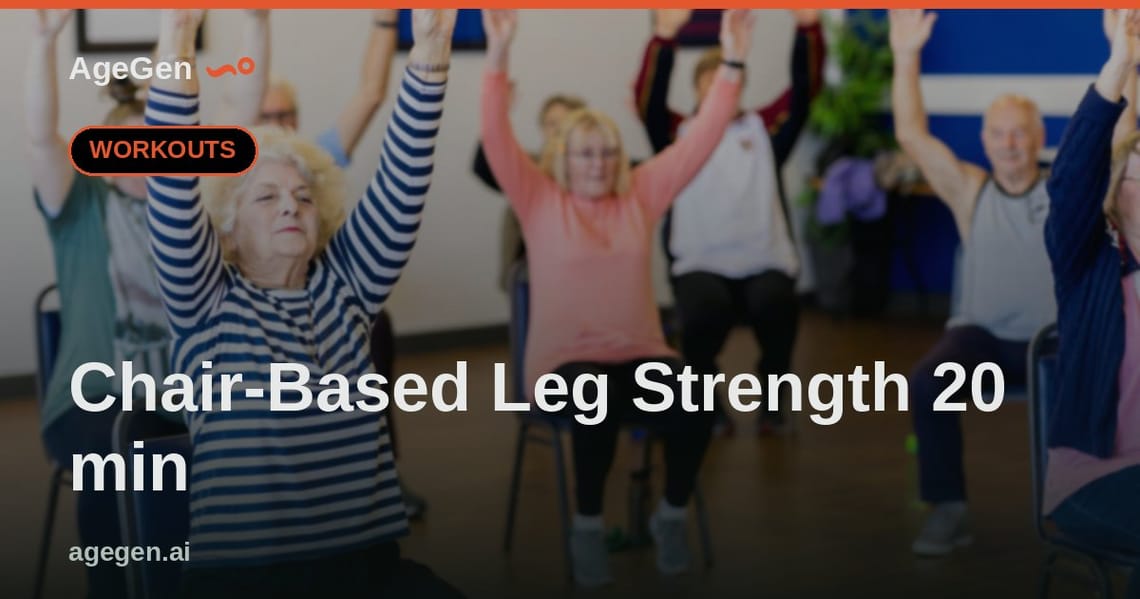
Four lower-body strength moves done against a sturdy chair — chair stands, toe stands, side leg raises and back leg raises — built for older adults or anyone returning to exercise, with the chair there for support whenever you feel unsteady.
The session at a glance
- Focus: strength
- Intensity: low
- Duration: 20 minutes
- Equipment: chair
The protocol
- Seated warm-up — 5 min. Sit upright, feet flat, knees at right angles; ankle circles, marching in place, gentle upper-body turns to each side.
- Chair stand — 1x12-15. Sit toward the front of a sturdy chair with no wheels, placed against a wall so it cannot slide; rise to full standing, then sit back down slowly; use your hands on the chair for support if needed.
- Toe stand — 1x12-15. Stand behind the chair with both hands on its back for balance, rise onto the balls of your feet, lower slowly.
- Side leg raise — 1x12-15 each leg. Stand behind the chair holding its back, torso upright, lift the leg out to the side and lower with control.
- Back leg raise — 1x12-15 each leg. Stand behind the chair holding its back, lift one straight leg backward without bending the knee or leaning forward.
- Cool-down — 3 min. Slow seated breathing and gentle stretches for the thighs and calves.
Why this works
- Muscle-strengthening work on two or more days a week is part of the CDC's recommendation for older adults, and people can keep building muscle well into their 80s.
- Every move loads the legs — the muscle group most tied to getting up from a chair, climbing stairs and avoiding falls — without needing weights or a gym.
- The chair gives constant hand support, which lets someone unsteady on their feet train real strength rather than skipping it for safety.
How to scale it
- Use a solid, stable chair without wheels, placed against a wall so it cannot slide.
- Keep the chair — or a person nearby — within reach to hold on to whenever you feel unsteady.
- Start slowly, and talk with your health care provider first if you are not active now and plan to increase your activity significantly.
Sources
- National Institute on Aging — How Strength Training Builds Healthier Bodies as We Age
- CDC — Physical Activity Guidelines for Older Adults
- MedlinePlus — Exercise and Physical Fitness
- NHS — Sitting Exercises
AgeGen workouts cite authoritative landing pages, not anecdote. If a claim isn't in the linked source, we don't make it.