Heat–Cold Contrast Shower
End your shower with three cycles of 30 s hot → 30 s cold. Trains autonomic flexibility, elevates norepinephrine, and builds long-term HRV — three minutes, daily, no extra equipment.
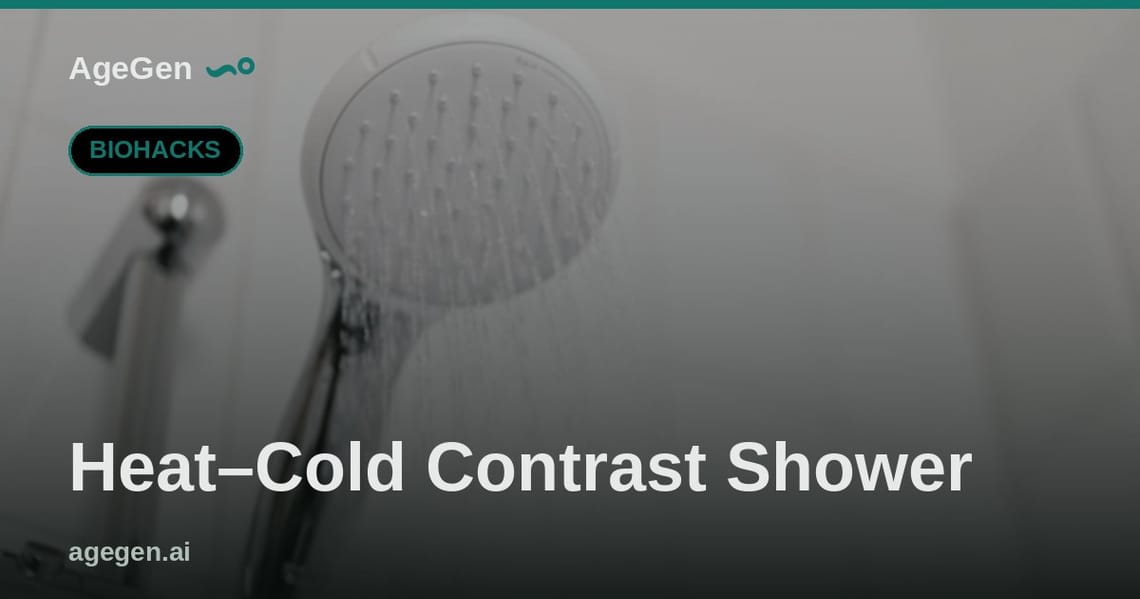
End the regular warm shower with three cycles of 30 s hot then 30 s cold — a daily protocol that trains autonomic flexibility, elevates circulating norepinephrine, and builds long-term HRV with no equipment beyond your existing shower. Total additional time: three minutes.
Watch the 22-second version
Three minutes at the end of your shower to train your nervous system.
Transcript & sources → All videosMr. Age is AgeGen's editorial character. Facts come from the protocol above.
Protocol
- Shower normally at your preferred warm temperature.
- At the end, run three cycles of 30 s as hot as comfortable → 30 s as cold as the tap allows.
- Finish on cold. Ending cold, not warm, is part of the mechanism — finishing warm blunts the vasoconstriction–vasodilation cycle.
- Frequency: daily.
What you get
- Training of autonomic flexibility — the heart-rate variability response to rapid temperature shifts.
- A norepinephrine release that increases alertness for one to two hours post-shower.
- Cumulative improvement in resting HRV with daily practice.
- Faster post-workout recovery when done after easy (not strength) sessions — see the Post-Strength Cold Rule before stacking with training.
Contraindications
- Raynaud syndrome — cold exposure can trigger vasospasm in affected extremities.
- Uncontrolled hypertension — rapid vasoconstriction transiently raises blood pressure.
- Cold urticaria — a cold-induced allergic skin reaction; test with a brief cold exposure before committing to the full protocol.
Evidence level
Medium. The autonomic-flexibility and norepinephrine responses to alternating hot–cold exposure are supported by controlled studies, but most research uses cold-water immersion or sauna protocols rather than contrast showers specifically. The effect direction is consistent and the biological mechanism is plausible. Honour the contraindications without exception.
Related protocols
Sources
AgeGen never invents studies and never recommends prescription drugs by brand. Biohacks are experiments, not prescriptions — honour the contraindications and talk to a clinician if a condition above applies to you.