Midday Shade Rule — 10 a.m. to 4 p.m.
Take your daylight in the morning and late afternoon and seek shade from 10 a.m. to 4 p.m., when UV is strongest, combining shade, a hat and clothing.
Get your daylight in the morning and late afternoon, and seek shade between 10 a.m. and 4 p.m., when UV rays are strongest.
Shade, a wide-brimmed hat and covering clothing work together; relying on one method alone protects less.
The protocol
- Window: 10 a.m. – 4 p.m.: shade by default, especially in summer, at altitude or near the equator.
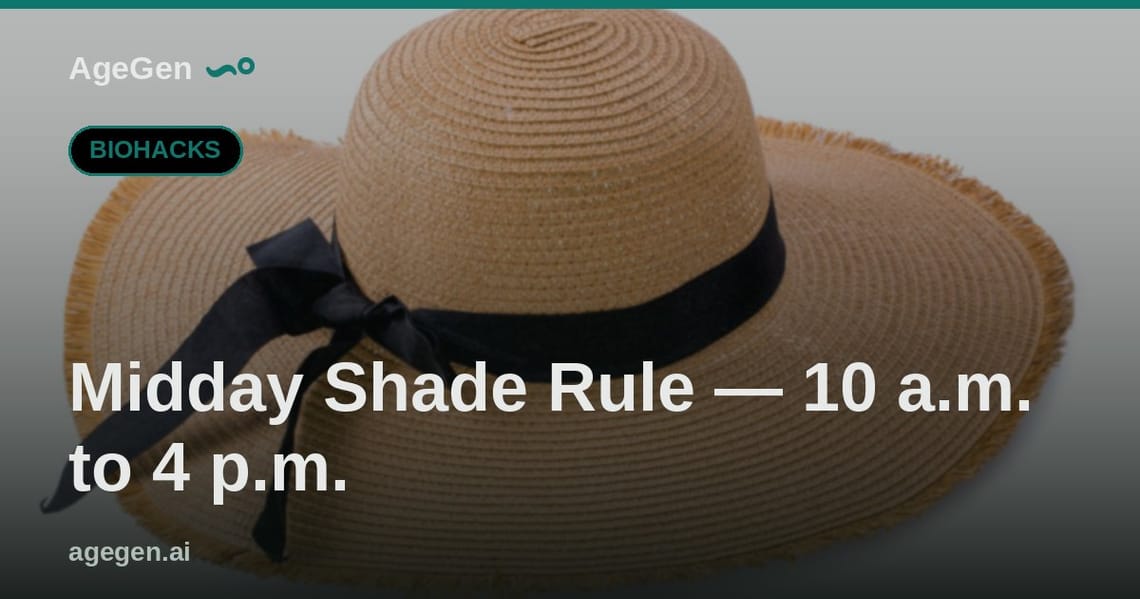
- Hat: wide brim that shades face, ears and neck.
- Eyes: wrap-around sunglasses that block UVA and UVB.
- Layers: combine methods — shade plus covering beats any single one.
- Keep: morning light outdoors still counts; this rule moves exposure, it does not remove it.
- Duration: ongoing, strictest in summer.
What you get
- Cuts exposure during the hours when UVB is most intense.
- Helps prevent sunburn.
- Compatible with morning-light habits.
Contraindications
- Some medicines increase sun sensitivity — including certain antibiotics, NSAIDs, diuretics and cancer therapies; ask a pharmacist whether yours do.
- A new growth, a sore that does not heal or a changing mole needs a doctor, not a shade habit.
Evidence level
High. Seeking shade during peak UV hours is a standard sun-safety recommendation of the CDC; the sources below describe the method and the symptoms that need a doctor.
Related protocols
Sources
AgeGen never invents studies and never recommends prescription drugs by brand. Biohacks are experiments, not prescriptions — honour the contraindications and talk to a clinician if a condition above applies to you.