Grounding (Earthing): 10 Minutes Barefoot Outdoors
If you spend most of your day indoors, even ten minutes of barefoot outdoor time is a low-cost daily habit. We walk through the protocol, the contraindications, and why grounding evidence is rated 'low'.
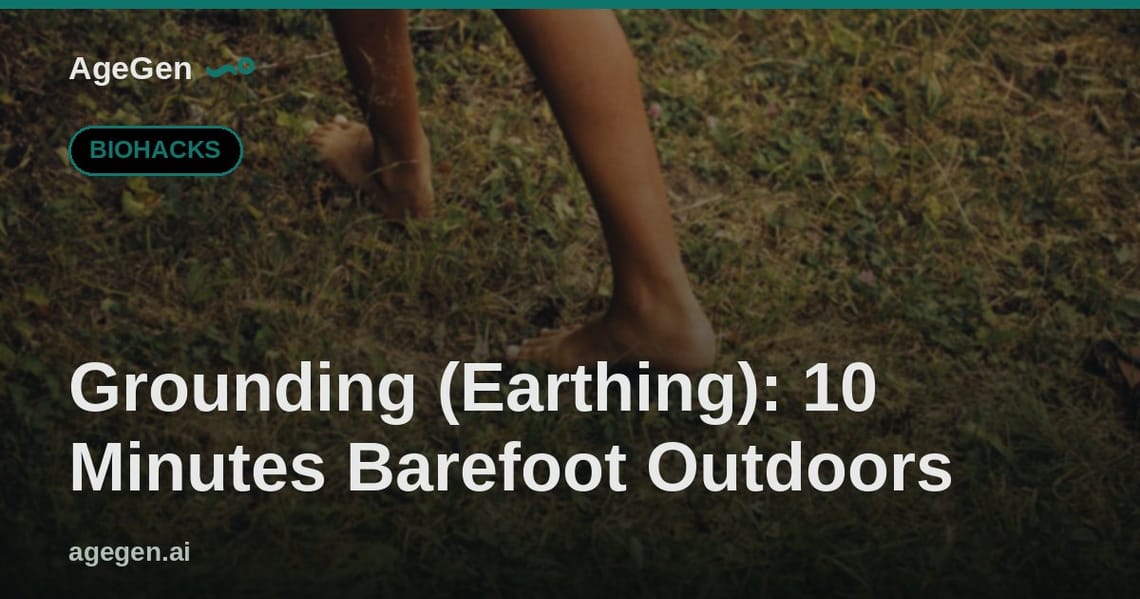
If you spend most of your day indoors, even ten minutes of barefoot outdoor time is a low-cost addition to your daily routine. Grounding (also called "earthing") asks you to stand or sit with bare feet on grass, sand, or unsealed earth for ten minutes a day. Advocates claim direct electron transfer from the ground reduces inflammation and improves sleep — the controlled evidence is sparse and based on small samples, so treat grounding as an outdoor habit rather than a validated protocol.
Watch the 23-second version
Grounding is everywhere right now. Let's be honest.
Transcript & sources → All videosMr. Age is AgeGen's editorial character. Facts come from the protocol above.
The protocol
- Surface: grass, sand, or unsealed earth (not concrete, not painted decking).
- Duration: 10 minutes.
- Frequency: daily if feasible — pair with morning light exposure for a single outdoor block.
What you get
- Guaranteed outdoor time, which independently correlates with better mood and circadian alignment.
- Possible parasympathetic (rest-and-digest) activation from the act of standing still outdoors.
Contraindications
- Open wounds on the feet.
- Sharp-object risk in the chosen environment (broken glass, debris).
Evidence level
Low. Published trials exist but are small (typically < 50 participants), short-duration, and frequently funded by grounding-product vendors. Treat it as a free, low-risk habit; do not buy expensive equipment.
Related protocols
Sources
AgeGen never invents studies and never recommends prescription drugs by brand. If a fact isn't sourced, we say so.