HRV — Morning Tracking
Sixty seconds of HRV on waking, tracked as a 7-day rolling average — an objective early signal of accumulated stress and under-recovery before performance drops.
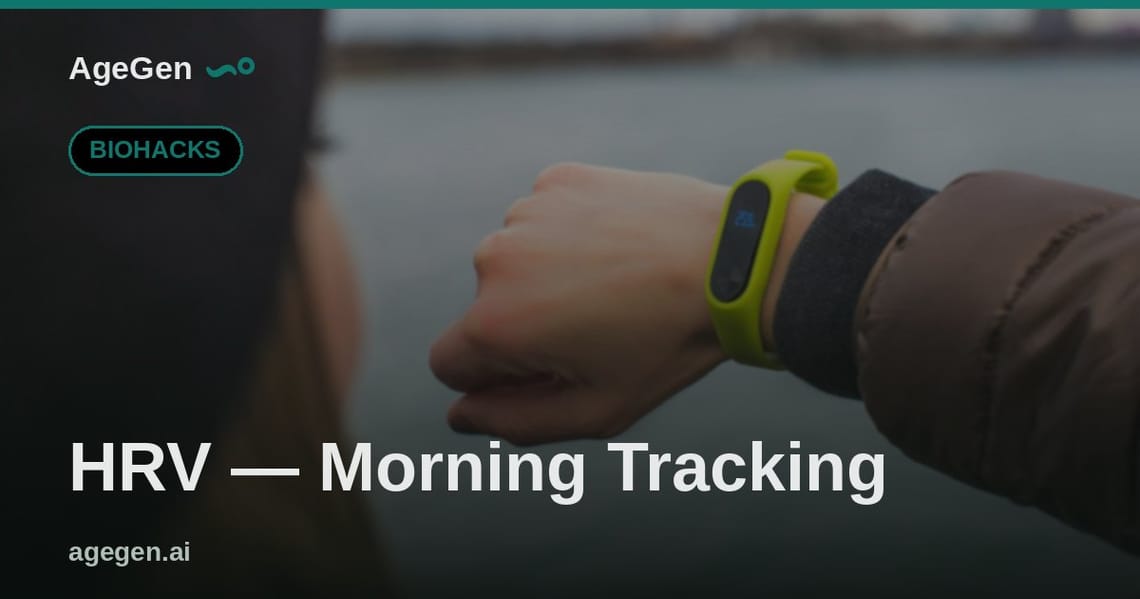
Measuring heart-rate variability for 60 seconds on waking each morning — tracked as a 7-day rolling average, not a single reading — gives an objective signal of accumulated stress and under-recovery before performance drops are felt. Trend beats snapshot.
Watch the 23-second version
First thing on waking, before I touch my phone, I measure heart-rate variability for sixty seconds.
Transcript & sources → All videosMr. Age is AgeGen's editorial character. Facts come from the protocol above.
The protocol
- When: immediately on waking, before phone, before coffee.
- Position: lying still on your back.
- Duration: 60 seconds.
- Tool: a chest strap (highest accuracy) or a validated wrist wearable.
- Analysis: 7-day rolling average. Ignore individual-day readings — single values are too noisy to act on. A sustained downward trend over 3–5 days is the signal.
- Frequency: daily.
What you get
- Early warning of accumulated stress or under-recovery — typically 24–48 hours before subjective fatigue becomes obvious.
- Objective training-load feedback: a low HRV day is a cue to reduce intensity, not add volume.
- A longitudinal record of your baseline — useful for spotting seasonal, lifestyle, or illness-driven shifts over months.
Contraindications
- Atrial fibrillation: HRV readings are invalid in the presence of AF; consult a cardiologist before interpreting any wearable HRV data.
- Data anxiety risk: if daily numbers cause stress rather than reduce it, track weekly or stop — the tool should serve recovery, not undermine it.
Evidence level
Medium. The association between HRV trend and training readiness is supported by reasonable evidence in athletic and occupational-stress literature. Individual response to HRV-guided training varies; the 7-day rolling average reduces noise but does not eliminate it. Treat it as one signal among several, not a sole arbiter.
A chest strap works — the ring I wear takes the reading while I'm still asleep, which is the version I actually keep up.
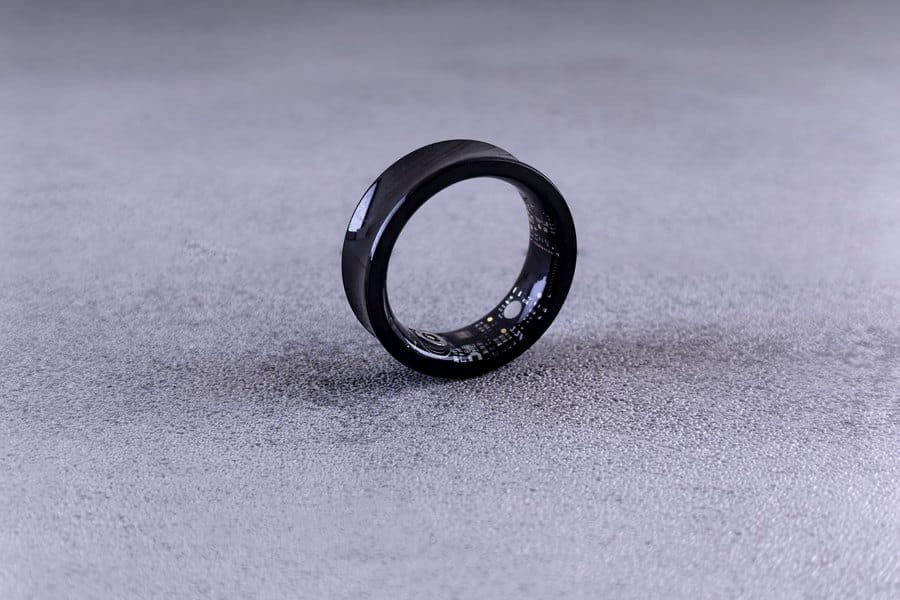
Oura Ring 5 — Sleep & Recovery Tracker
A wearable ring that estimates sleep stages, resting heart rate and heart-rate variability overnight — useful for spotting how training, alcohol and late meals affect your recovery.
See it in the shop →Illustrative photo. We may earn a commission — the affiliate link and the full disclosure live on our shop page.
Related protocols
- Sleep Tracker Baseline — 2 Weeks
- Red Light Therapy 10 min
- Grounding (Earthing): 10 Minutes Barefoot Outdoors
Sources
AgeGen never invents studies and never recommends prescription drugs by brand. Biohacks are experiments, not prescriptions — honour the contraindications and talk to a clinician if a condition above applies to you.