Home Blood Pressure — 7-Day Series
Take two blood-pressure readings each morning and evening for seven days on a validated upper-arm cuff, then average the whole week.
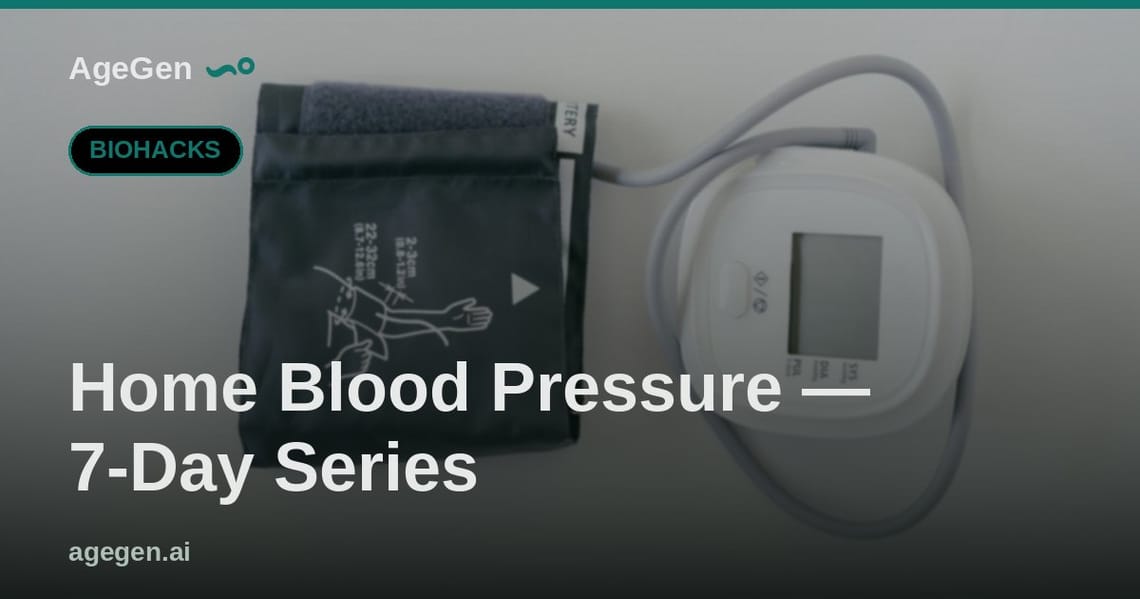
Take two blood-pressure readings each morning and evening for seven days on a validated upper-arm cuff, then average the whole week. A single clinic reading is one sample of a number that swings all day; a week-long home series is what actually characterises your blood pressure, and the American Heart Association recommends home monitoring for exactly that reason.
Watch the 30-second version
One clinic reading is a single sample of a number that swings all day.
Transcript & sources → All videosMr. Age is AgeGen's editorial character. Facts come from the protocol above.
The protocol
- Device: an automatic cuff-style upper-arm monitor. Wrist and finger monitors are not recommended.
- Frequency: 2 readings in the morning and 2 in the evening, one minute apart.
- Technique: 5 minutes of quiet rest first; back supported, feet flat on the floor, arm supported at heart level, cuff on bare skin.
- Before each reading: no caffeine, exercise or smoking in the previous 30 minutes; empty bladder; do not talk during the measurement.
- Recording: log every reading. Average the whole week — not the best day.
- Duration: 7 consecutive days.
What you get
- A real baseline. Twenty-eight readings describe a range; one clinic number describes a moment.
- White-coat and masked patterns become visible. Both are only detectable by comparing readings taken outside the clinic with the ones taken inside it.
- Data a clinician can use. A dated log of a full week is a far better input to a consultation than a recollection.
- Cheap and repeatable. One device, and the series can be repeated whenever something changes.
Contraindications
- This does not replace clinical review — bring the log to a clinician.
- Atrial fibrillation and some other arrhythmias make automatic cuffs unreliable.
- Do not adjust any prescribed medication based on home readings.
- In pregnancy, use only the device and the schedule your clinician specifies.
Evidence level
High. Out-of-office measurement is standard guidance rather than an experiment: home series predict cardiovascular outcomes better than isolated clinic readings, and they are the accepted way to identify white-coat and masked hypertension. The protocol above is a measurement procedure — the numbers it produces are a question for a clinician, never an instruction to act on alone.
Wrist and finger monitors don't count for this — the cuff on my shelf is what I use.
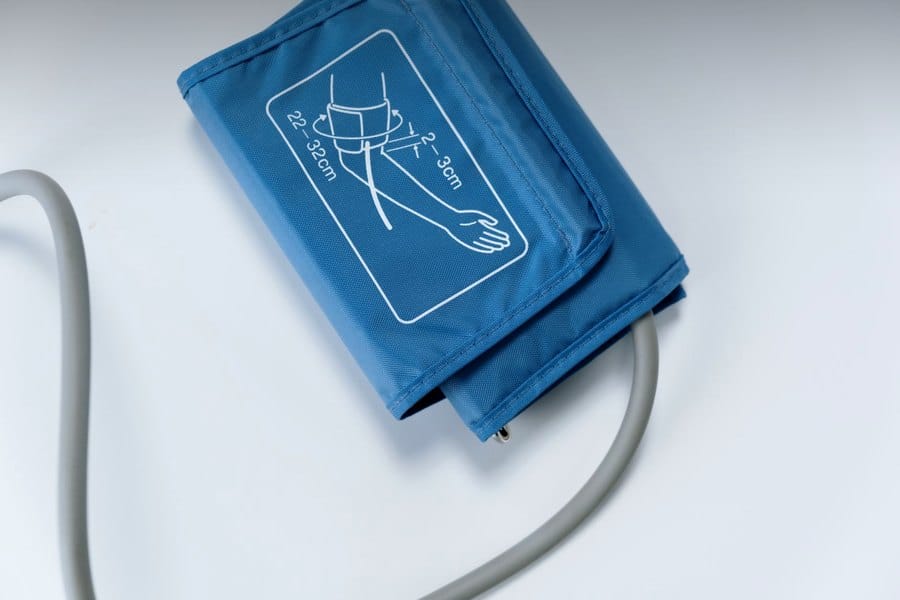
Home Blood-Pressure Monitor
An upper-arm cuff for tracking blood pressure at home — one of the most informative numbers you can self-measure, since readings at the clinic are often higher (the white-coat effect).
See it in the shop →Illustrative photo. We may earn a commission — the affiliate link and the full disclosure live on our shop page.
Related protocols
Sources
AgeGen never invents studies and never recommends prescription drugs by brand. Biohacks are experiments, not prescriptions — honour the contraindications and talk to a clinician if a condition above applies to you.