Name the Emotion (Affect Labeling)
When stress rises, name it out loud or on paper: "I am noticing anxiety about the deadline." Labelling the emotion lowers amygdala activity and restores prefrontal control in under a minute.
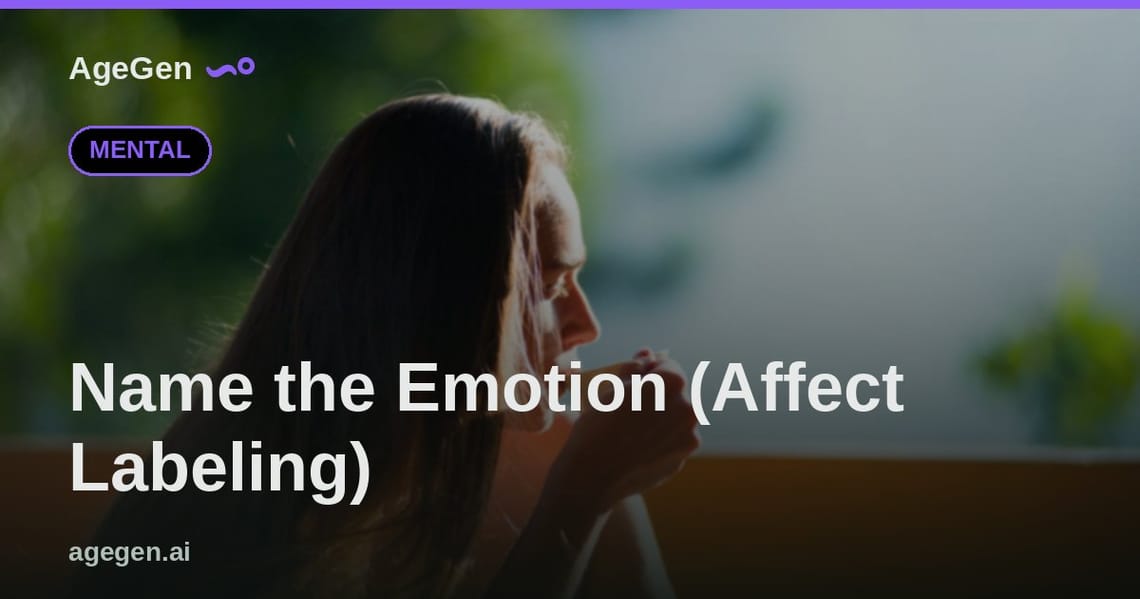
When stress spikes, name it — out loud or on paper: "I am noticing anxiety about the deadline." Labelling the emotion (affect labeling) lowers amygdala activation and restores prefrontal regulation in under a minute.
The practice
When you notice a strong negative emotion — stress, anger, dread, frustration — pause and put a precise label on it in plain language: "I notice I am feeling anxious" rather than just experiencing the anxiety. Say it out loud, whisper it, or write it down. All three work. The key is the naming step itself, not what follows it.
Where it fits in a day
- Before a high-stakes meeting or conversation: naming pre-performance anxiety shifts processing from the limbic system toward deliberate reasoning and typically narrows the emotional intensity within seconds.
- When you notice early physical signs of stress: jaw tension, chest tightness, shallow breathing — name the emotion before it escalates.
- Before any decision taken under emotional pressure: labelling interrupts the emotional hijack that produces reactive decisions and creates a brief window for deliberate choice.
Why it works
- Prefrontal activation. Naming an emotion shifts processing from the amygdala (fast, reactive, emotional) toward the prefrontal cortex (deliberate, regulatory). Neuroimaging studies show reduced amygdala activation when subjects label their emotional state.
- No prior practice required. Unlike mindfulness meditation or cognitive defusion, affect labeling works on the first use. The effect is immediate, not cumulative — which makes it available in any acute stress moment.
- Precision matters. More specific labels ("I notice frustrated impatience" vs. "I feel bad") produce stronger regulatory effects — the brain processes greater semantic specificity, which recruits more prefrontal resources.
Category
Stress. A neuroscience-based reframe used in cognitive-behavioural therapy and affective neuroscience research. Takes under a minute with no equipment.
Related protocols
- Worry Window — Scheduled 15 min
- Progressive Muscle Relaxation 12 min
- Physiological Sigh — Acute Stress Rescue
Sources
AgeGen mental-recovery practices are drawn from authoritative health agencies. We never claim therapeutic effects unsupported by the linked sources.