Daily Step Floor
Set a minimum step count you hit every day — including your worst one — rather than a weekly average you can rescue on Sunday.

Set a minimum step count you hit every day — including your worst one — rather than a weekly average you can rescue on Sunday. A floor changes the decision from "did I train today?" to "have I moved yet?" — and the second question is far harder to negotiate with at 10 p.m.
Watch the 25-second version
Stop chasing a weekly step average you rescue on Sunday.
Transcript & sources → All videosMr. Age is AgeGen's editorial character. Facts come from the protocol above.
The protocol
- Step 1. Measure your true 7-day average before setting any target. Use the phone you already carry; do not guess.
- Step 2. Set the floor slightly above that average — not at 10,000 because the internet said so. A target you can reliably hit on a bad day is more useful than one that requires a good one.
- Step 3. Hold it daily for 3 weeks, then re-evaluate. If it has become automatic, nudge the floor up by 1,000.
- Duration: Ongoing. This is a movement baseline, not a training block.
- Rescue plan. Decide in advance where the recovery steps come from on a bad day — one walk after dinner usually closes the gap. The decision needs to be made before the bad day arrives.
- Note: A step floor is a non-exercise activity target, not a substitute for structured aerobic or strength work.
What you get
- Higher NEAT. Non-exercise activity thermogenesis — the energy spent moving outside deliberate training — is the largest and most variable component of daily energy expenditure. A floor raises it without adding sessions.
- A harder-to-skip target. A daily floor is structurally harder to miss than a weekly total, which can silently accumulate a debt until Saturday.
- No equipment. The phone already in your pocket is the only tool required.
- Stacks with post-meal walks. A 10–15 minute walk after the two largest meals of the day often delivers 2,000–3,000 steps and simultaneously blunts post-meal glucose excursion.
Contraindications
- Acute injury or a flare of a joint condition — volume targets go through a clinician.
- A step count is a proxy signal, not a health outcome in itself. Do not chase it at the expense of sleep.
- If a daily step target begins driving compulsive or distressing behaviour, drop the tracking.
Evidence level
High. The association between higher daily step counts and lower all-cause and cardiovascular mortality is robust across large prospective cohorts, with near-linear dose-response across the 4,000–10,000 range. The daily-floor framing is a behavioural implementation strategy, not a separate studied intervention.
On the days the weather wins, the rest of them come from the pad under my desk.
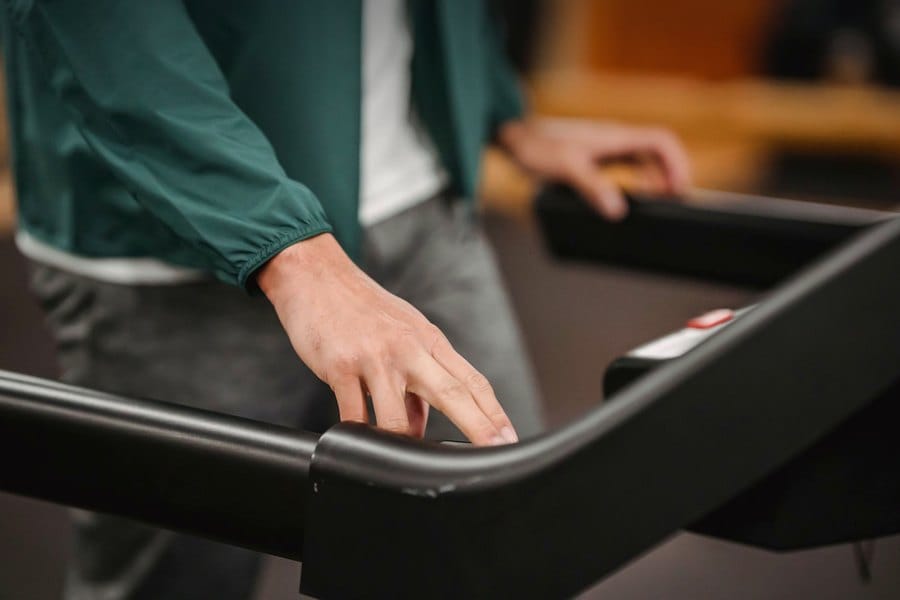
Under-Desk Walking Pad
A flat treadmill that fits under a desk and runs at walking speed, which turns sedentary desk hours into steps toward a daily floor.
See it in the shop →Illustrative photo. We may earn a commission — the affiliate link and the full disclosure live on our shop page.
Related protocols
Sources
AgeGen never invents studies and never recommends prescription drugs by brand. Biohacks are experiments, not prescriptions — honour the contraindications and talk to a clinician if a condition above applies to you.